



Ultrazonic

Frequency Modulation in Advanced Ultrasonic Cleaning

At UltraZonic, we use frequency modulation in advanced ultrasonic cleaning to improve consistency. In real tanks, cavitation intensity is not perfectly uniform: standing-wave patterns, load geometry, and transducer layout can create local peaks and dead zones. Frequency modulation shifts the cavitation pattern over time, helping distribute cleaning action more evenly across the usable volume. In regulated cleaning environments, this matters because it supports repeatability. This means fewer localized weak zones and less variability between positions in the tank.

Let’s talk about frequency modulation in ultrasonic cleaning

US & EU Patent

Pioneer in automated pre-cleaning

Certified quality (CE, LGA and ISO 13485)

Selecting a Range in Frequency Modulation for Advanced Ultrasonic Cleaning

Frequency selection is typically framed in bands because different frequency ranges can favor different cleaning requirements. Lower frequencies are often associated with more aggressive cavitation for robust soils and surfaces, while higher frequencies can support more delicate applications and fine-feature cleaning.

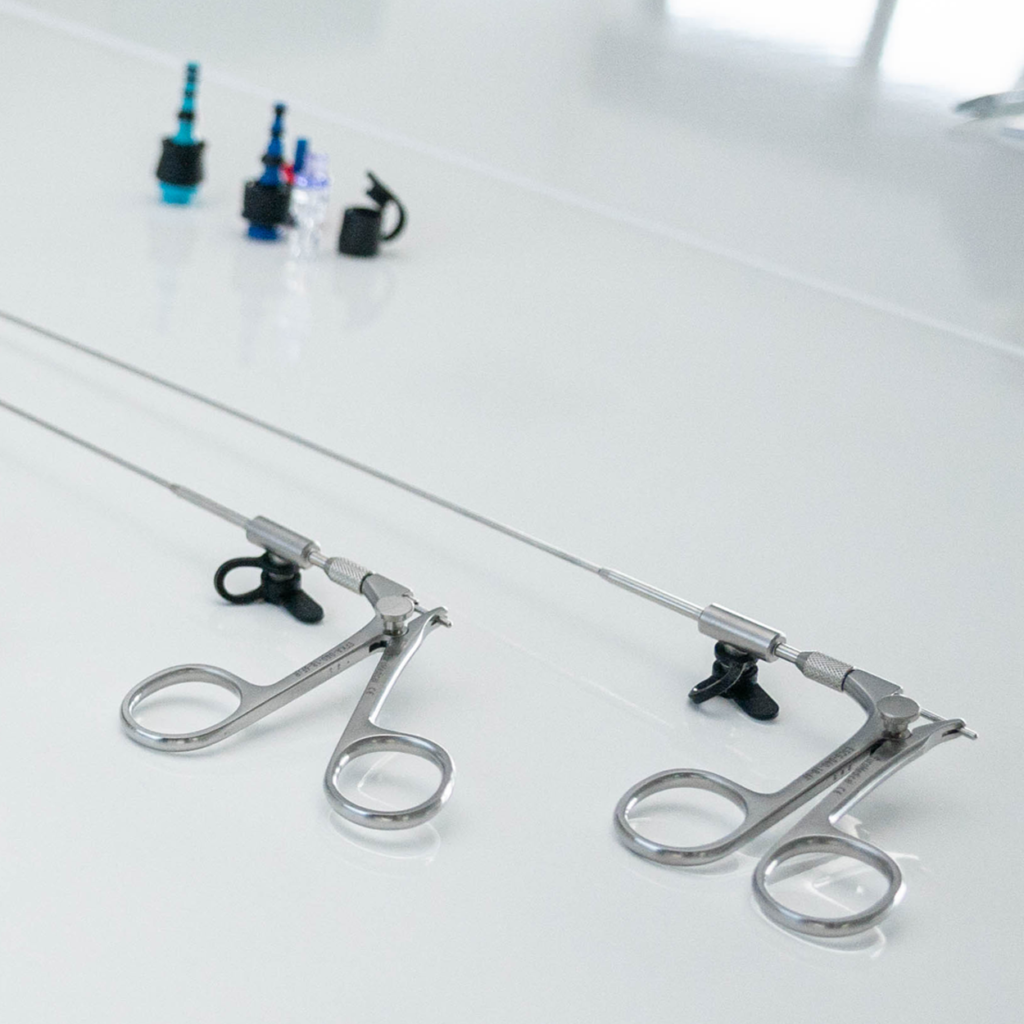
In medical contexts, frequency strategies are usually evaluated against material compatibility, instrument complexity, and the need for repeatable outcomes under defined validation conditions. This becomes especially relevant when processing advanced device designs such as Da Vinci instruments. Frequency modulation is used in advanced ultrasonic cleaning to better match the cleaning performance to a broader range of part geometries and soils.

Frequency Sweep Terminology: Center Frequency, Bandwidth, and Sweep Rate

In ultrasonic cleaning, frequency modulation is commonly described using three parameters:

  • Center frequency: the nominal operating frequency
  • Sweep bandwidth: the range the frequency moves through around the center (often expressed as ± kHz)
  • Sweep rate: how quickly the frequency traverses that range

These parameters matter because they influence how quickly the cavitation field changes and how broadly the system samples different resonance conditions in the tank and load. When frequency modulation is configured appropriately in advanced ultrasonic cleaning, it can reduce sensitivity to minor variations in load placement and fluid conditions, making cleaning action less position-dependent.
SAFETY III

Advanced frequency modulation for reliable ultrasonic cleaning

Chung San Medical University Taichung Taiwan

MED: Stabilizing Cavitation for Reprocessing of Surgical Instruments

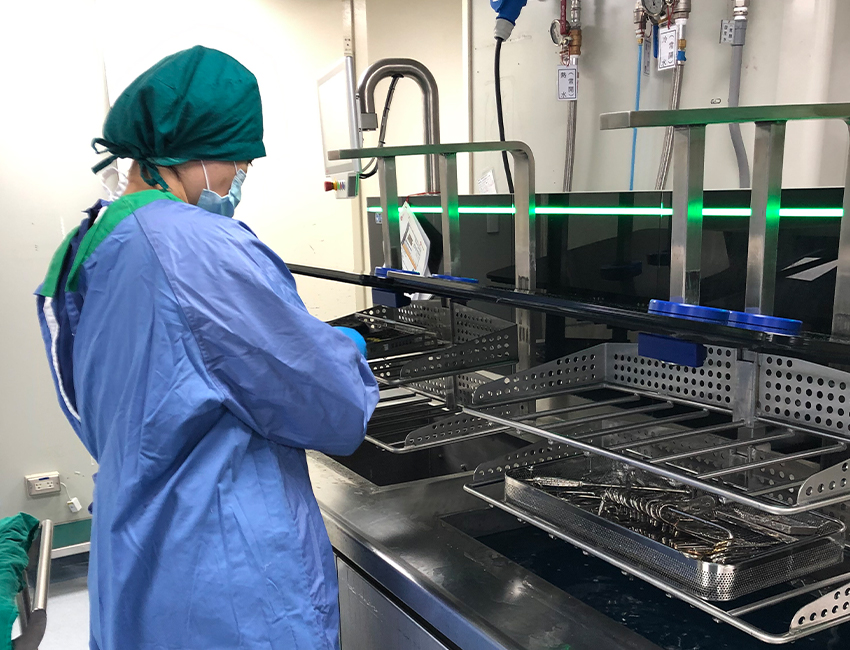
MED is our ultrasonic cleaner for surgical instruments and is designed to deliver controlled, repeatable pre-treatment in sterile processing workflows. In practical use, the relevance of frequency modulation in advanced ultrasonic cleaning is its potential contribution to more uniform cavitation activity across varied loads and instrument geometries. MED reduces sensitivity to placement effects and supports stable cleaning action under defined parameters. This way, it can support teams improve consistency in ultrasonic pre-cleaning before downstream disinfection and sterilization steps, supporting infection control for surgical instruments.

Let’s Talk About Frequency Modulation in Your Workflow

Frequency modulation in advanced ultrasonic cleaning supports more consistent cavitation behavior. It reduces position-dependent variation and stabilizes performance across routine load changes. Do you want to know how frequency modulation can be applied within your ultrasonic cleaning setup? Contact us to discuss your reprocessing workflow.

let's talk!

We are here to listen and help where possible.