


Ultrazonic

Infection Control for Surgical Instruments

In a busy CSSD, you are balancing complex instrument sets, fast turnover, and limited tolerance for rework, so small variations in handling or cleaning quickly become patient safety and compliance risks. This is why infection control for surgical instruments matters. At UltraZonic, we help you keep cleaning outcomes consistent across shifts and ensure instruments enter downstream processes in a controlled, validated condition.

Reach out to control infections

US & EU Patent

Pioneer in automated pre-cleaning

Certified quality (CE, LGA and ISO 13485)

Challenges in Infection Control for Surgical Instruments

Controlling infections for surgical instruments is difficult because reusable instruments combine high bioburden exposure with complex geometries that are easily under-cleaned. When soil dries during transport or point-of-use handling is inconsistent, removal becomes less predictable and reprocessing exceptions increase. Variation also comes from manual techniques, especially when sets are processed under time pressure. Infection prevention solutions are critical to reduce operator-to-operator variation and standardize the earliest cleaning conditions before downstream disinfection and sterilization.

How to Control Infections in Surgical Instrument Workflows

Effective infection control starts by keeping the roles of cleaning, disinfection, and sterilization clear.

  • Cleaning removes soil so later stages can work as intended
  • Disinfection reduces microbial load but does not compensate for retained debris
  • Sterilization targets microorganisms but is compromised by residual contamination on instrument surfaces.

In practice, automated pre-treatment for surgical instruments can reduce early-stage variability by standardizing timing, handling, and key parameters before washer-disinfector cycles. Verification matters as much as execution, documented pass/fail checks and traceability make it possible to audit compliance and investigate deviations. In some workflows artificial intelligence can support review by flagging inconsistencies in recorded evidence and documentation.

REFERENCES - BANNER

Talk to us about instrument infection control

Infection Prevention

MED: Ultrasonic Pre-Treatment That Stabilizes Cleaning Input

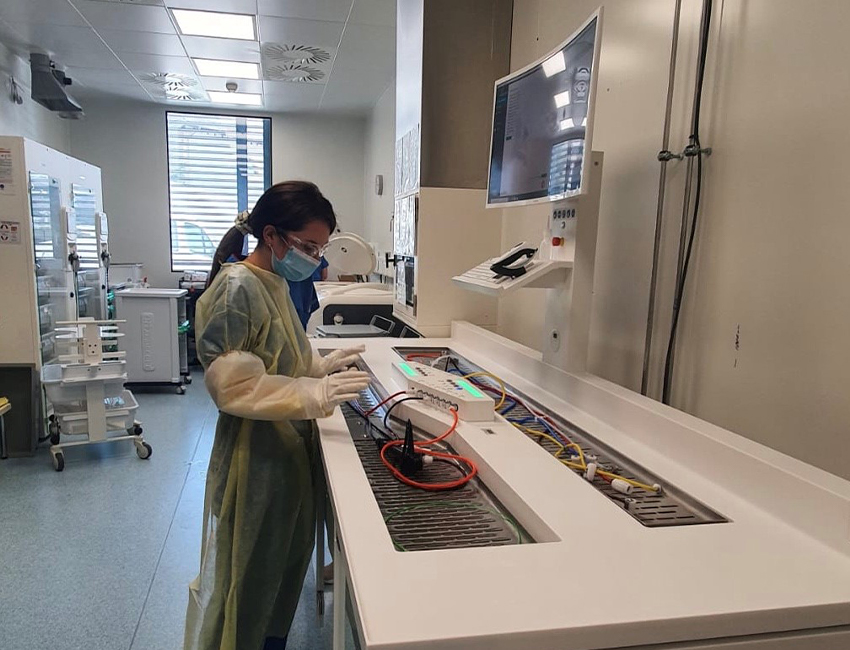
To control infections for surgical instruments, we have developed MED, our ultrasonic cleaner for surgical instruments, as a controlled pre-treatment step before downstream disinfection and sterilization. It uses frequency modulation to support more uniform cavitation activity across varied loads and instrument geometries, making cleaning action less position-dependent. By reducing sensitivity to handling differences and load placement effects, MED helps create a more uniform starting condition across loads so instruments enter subsequent validated processes in a standardized state.

Reach Out to Learn More About Preventing Infections

Infection control for surgical instruments becomes more reliable when cleaning of medical instruments is standardized and verified, so downstream disinfection and sterilization can perform as intended. Contact us to reduce variability, limit rework, and strengthen patient safety with a controlled pre-treatment approach.

let's talk!

We are here to listen and help where possible.